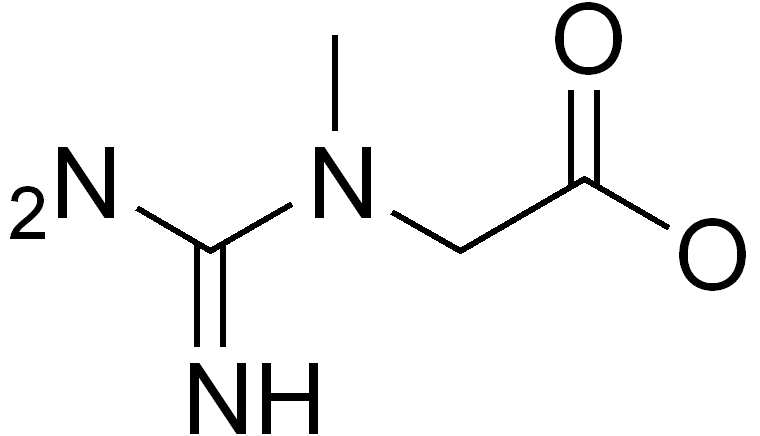
Creatine is not just circulating in blood before it becomes useful. Skeletal muscle holds a concentrated reserve of creatine and phosphocreatine, and the size of that reserve helps determine how rapidly ATP can be regenerated during demanding work. Muscle stores reflect a dynamic balance between dietary intake, endogenous synthesis, transport into muscle, and breakdown. Supplementing creatine changes this balance. The early human biopsy studies established that repeated dosing can measurably raise the total pool, while later work showed that different loading schedules can converge on a similar end point. Understanding those processes is more informative than treating saturation as a simple on-or-off switch.
Muscle stores are a buffered energy system
Total muscle creatine includes free creatine plus phosphocreatine, the phosphorylated form that participates directly in ATP recycling. A larger total pool is associated with a larger phosphocreatine reserve, which can support ATP resynthesis during repeated intense contractions. The term saturation is useful but imperfect: it describes a practical ceiling or plateau in supplementation response rather than a laboratory switch at which every muscle cell is full. Individual fibers, muscle groups, and people need not reach the same concentration at the same rate.
The reserve is also only one part of the energy system. ATP is needed continuously, and its availability during exercise reflects the interaction among phosphocreatine, glycogen, glycolysis, and oxidative metabolism. Increasing phosphocreatine can improve capacity during transitions or repeated efforts without changing the amount of ATP stored directly. This is why muscle creatine measures are mechanistic endpoints, not performance guarantees. A larger reservoir makes sense as a benefit when the task repeatedly demands rapid ATP turnover.
Diet and synthesis set the starting point
The body synthesizes creatine from amino acid precursors in the kidneys, liver, and pancreas, and absorbs dietary creatine from foods such as meat and fish. Creatine is not a required nutrient in the same way as vitamins, but dietary intake clearly influences the body pool. People who eat little or no meat generally have lower average muscle creatine than habitual meat eaters, although individual values overlap and not every vegetarian responds in the same way.
The foundational 1992 supplementation study found larger increases in participants who began with lower total muscle creatine, with some lower-store participants approaching the upper end of the normal range. This pattern supports the idea that intake and starting position limit saturation. It does not mean vegetarians are obligate supplement users or that they always experience larger functional benefits. A tissue response and a visible performance change are different outcomes, and the latter also depends on the task and training status.
How repeated intake raises the pool
Oral creatine monohydrate is absorbed, enters the circulation, and is taken up by muscle through transport processes. Repeated dosing maintains plasma exposure long enough for uptake to occur. Early in supplementation, some of the ingested creatine is lost in urine, and a larger dose initially can increase the fraction available for tissue uptake. Over time, once muscle concentrations rise, urinary losses also increase. This feedback helps explain why indefinite high intake is unnecessary for saturation and why the common adult maintenance dose is lower than a loading dose.
A 1996 protocol comparison found that 20 grams per day for six days and 3 grams per day for 28 days produced similar increases in total muscle creatine, approximately 20% in that study. Once loaded, 2 grams per day maintained the concentration for 30 days, while stores gradually declined after discontinuation. These figures come from a small, male-only mechanistic study and should not be treated as universal prescription rules, but they illustrate the central pattern: saturation takes time, maintenance is less demanding than loading, and the store begins to fall when intake stops.
| Protocol evidence | Intake pattern | Muscle-creatine result | Practical reading |
|---|---|---|---|
| 1996 biopsy comparison | 20 g/day for 6 days | Rapid rise in total muscle creatine | Fast route to saturation |
| 1996 biopsy comparison | 3 g/day for 28 days | Similar total increase to rapid loading | Slower route without a large loading dose |
| 1996 maintenance phase | 2 g/day after loading | Loaded concentration maintained for 30 days | Older evidence that maintenance can be modest |
| Modern practical guidance | 3–5 g/day, no loading | Gradual saturation over several weeks | Convenient default for healthy adults |
Training, timing, and response set the practical ceiling
In the early biopsy work, hard exercise in one leg increased creatine accumulation in that trained leg relative to the collateral leg, suggesting that local training can influence uptake. This observation does not establish that training is required for saturation, nor does it prove that a precisely timed dose is superior. Reviews of dosing and timing find that daily intake is more important than placing the dose immediately before training. Once stores are filled, distributing the dose across meals may be convenient and can improve gastrointestinal comfort, but a single daily dose remains effective for many users.
Individual responses vary because of baseline stores, diet, body mass, renal handling, training pattern, and genetics. Some people report a larger early increase in body mass from muscle-associated water, while others notice little. A flat performance response should not automatically be labeled failed saturation, because the exercise may not be sensitive to the phosphagen system. Conversely, an enthusiastic first-week response may reflect learning, motivation, or hydration rather than the full tissue change.
Store response and performance response may also develop on different timelines. Muscle creatine can rise before a change is obvious in a sport-specific task, and a training adaptation can require many weeks of repeated work. A person who expects every session to improve after the scoop is effective is measuring too much into too short a window. Conversely, preserving the training variables while keeping a weekly performance log can reveal a small but meaningful change that a single session would hide. The log should include load, repetitions, rest, and body weight, because a faster set can reflect better recovery while a heavier scale reading can reflect water rather than tissue. This approach does not reveal the exact tissue concentration, but it is a more honest way to connect supplementation with the outcome a user actually cares about.
How to interpret saturation without overclaiming
Routine muscle biopsy is not a practical or necessary target for most supplement users. A reasonable interpretation is that repeated creatine monohydrate intake reliably expands the average muscle creatine pool, with a larger relative increase in people starting lower. A higher store can then support repeated high-intensity work, but it is not a promise of a specific strength gain, lean-mass change, or cognitive benefit. Evaluate performance after several weeks with a stable training program and repeatable outcomes rather than one unusually demanding session.
Hydration changes deserve attention because added creatine can increase intracellular water and early body mass. That expansion is generally not the same as dehydration, but rapid weight changes can affect how a person interprets a program. People with kidney disease, pregnancy, minors, or medication use affecting renal function should not use general saturation studies as personal medical clearance. A clinician can help distinguish a normal supplement-related laboratory pattern from a true change in kidney function and decide whether supplementation is appropriate.
Frequently asked questions
What does creatine saturation mean?
It generally means muscle creatine has reached a practical plateau after repeated intake. It is not an absolute full-to-the-brim state, and tissue response can vary among people and muscle groups.
Do vegetarians have lower muscle creatine?
On average, people who eat little or no meat tend to have lower muscle creatine, though individual values overlap. They may have more room to increase stores with supplementation, but a larger tissue response does not guarantee a larger performance benefit.
How long does it take to build muscle creatine stores?
A loading protocol can raise stores within about a week, while slower saturation takes several weeks. Most people do not need a loading phase, and consistent daily intake is the key variable.
Do muscle creatine stores stay high after I stop?
No. Mechanistic studies indicate that stores gradually decline after supplementation stops, so maintenance depends on continued intake. The speed of loss and its practical importance vary among individuals.
Limitations
- Direct muscle-creatine measurement requires biopsy, and much of the practical evidence comes from small studies or inferred responses.
- Baseline stores, diet, training, and exercise protocol vary, so average tissue changes do not predict every person's performance experience.
- Mechanistic findings in healthy adults do not establish appropriateness for kidney disease, pregnancy, minors, or medication-related renal risk.
References
Elevation of creatine in resting and exercised muscle of normal subjects by creatine supplementation. — source record
Muscle creatine loading in men. — source record
Benefits of Creatine Supplementation for Vegetarians Compared to Omnivorous Athletes: A Systematic Review. — source record
Common questions and misconceptions about creatine supplementation: what does the scientific evidence really show? — source record
Creatine O'Clock: Does Timing of Ingestion Really Influence Muscle Mass and Performance? — source record
Effects of Creatine Supplementation on Renal Function: A Systematic Review and Meta-Analysis. — source record
Effect of creatine supplementation on kidney function: a systematic review and meta-analysis. — source record
Last updated: 2026-11-24