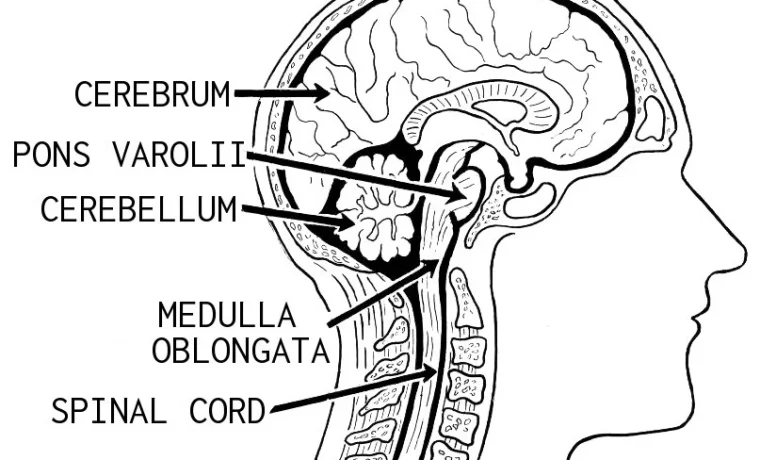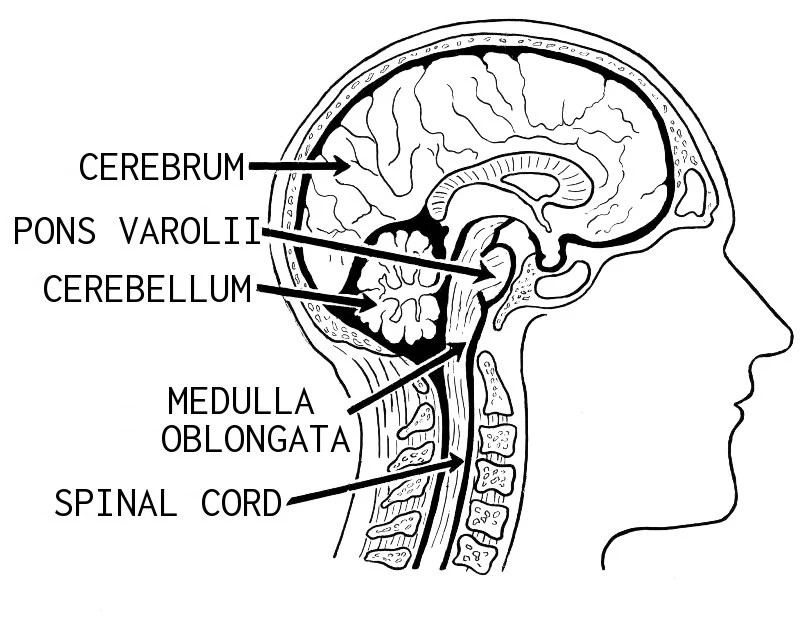
Mental fatigue can refer to subjective weariness, reduced motivation, slower performance, or a feeling that work has become harder than it should. These measures often diverge. A person may report extreme fatigue while maintaining objective performance, or perform worse without noticing a large change in perceived effort. Creatine has been proposed as a way to buffer fatigue because the brain uses ATP rapidly and brain creatine participates in energy buffering. Yet direct trials specifically designed around sustained mental effort are uncommon. The evidence supports a cautious research interest, not a confident claim that creatine reliably prevents or treats mental fatigue.
Mental fatigue is not one measurable thing
In exercise science, mental fatigue often describes a decline in performance caused by psychological or physiological factors other than muscle damage. It may be induced by prolonged cognitive work, sleep loss, dehydration, monotonous tasks, or high motivation demands. Researchers may measure reaction time, accuracy, power output, ratings of perceived exertion, mood, or willingness to continue. A treatment that changes one measure does not necessarily change the construct of mental fatigue in all its forms.
Subjective fatigue is also affected by expectations. In a supplement trial, participants who know they are taking creatine may feel more energetic, while blinding can reduce that expectancy effect. Objective performance can be influenced by sleep, task familiarity, caffeine, hydration, time of day, and the order of conditions. For that reason, direct evidence needs controlled stress conditions and outcomes collected before participants can infer which supplement they received. The current creatine literature is much stronger for exercise performance than for this specific fatigue construct.
The closest direct evidence comes from sleep deprivation
The small 2006 trial by McMorris and colleagues is often cited in discussions of mental fatigue. After 24 hours of sleep deprivation with intermittent mild exercise, participants receiving creatine showed less deterioration in choice reaction time, random-movement generation, balance, and mood than the placebo group. The result suggests possible protection against performance deterioration under severe sleep stress. It does not directly test a standard sustained cognitive-work protocol, and the design cannot separate all effects of the extreme condition.
A 2025 loading study also measured cognitive function and recovery alongside sleep, performance, and physical outcomes in physically active men. It is relevant to whether supplementation changes fatigue-related measures, but loading was brief, the sample was narrow, and sleep findings were limited. These studies support further investigation of resilience under energy stress. They do not establish that oral creatine is an effective anti-fatigue supplement in everyday work, study, or sport.
Cognition studies do not automatically settle fatigue
Systematic reviews of creatine and cognition sometimes include fatigue, mood, or vigor as outcomes. They show that cognitive benefits, where present, vary by domain and are not uniform in healthy adults. A review that includes several cognitive tasks is not the same as a trial with a prespecified mental-fatigue outcome. Similarly, an improvement in working memory under one condition does not demonstrate reduced tiredness during prolonged work. These distinctions matter because supplement marketing often turns a narrow result into a broad promise.
There is also a risk of reverse interpretation. If a person feels more alert after taking creatine, it could reflect better hydration, stimulant medications, a more structured routine, or placebo. Creatine is not generally classified as a stimulant and does not directly increase alertness like caffeine. Brain energy dynamics could influence vigilance, but objective testing and control for expectancy are needed. The literature does not justify describing creatine as a reliable way to stay awake or to push through a demanding cognitive shift.
A clearer view of the evidence map
The table below classifies the available evidence by the kind of fatigue it addresses. This prevents a result under total sleep deprivation from being presented as proof for ordinary work fatigue. No study category provides strong, consistent evidence for a general anti-fatigue effect across daily life. The rows also identify the missing research: chronic fatigue populations, realistic partial sleep restriction, long-duration cognitive work, and studies that separate perceived fatigue from objective performance.
A stronger future study would prespecify the fatigue manipulation and outcomes, use an active placebo and blinded dosing, recruit enough participants for small effects, and report both objective and subjective results. It should also record sleep, caffeine, prior training, hydration, mood, and time of day. Such design would show whether any benefit comes from altered perception or from sustained performance. The current evidence cannot make that distinction reliably.
| Condition studied | Closest available evidence | What the result supports | What remains unknown |
|---|---|---|---|
| Total sleep deprivation | Small double-blind trial with mild exercise | Less deterioration on selected measures in the creatine group | Whether the finding replicates or applies to partial sleep loss |
| Brief creatine loading | Crossover trial measuring sleep, cognition, and recovery | Data on combined outcomes rather than a general fatigue claim | Whether maintenance produces the same response |
| Healthy cognitive performance | Several systematic reviews of varied tasks | Possible effects on selected cognitive domains | Consistency across long mental-work protocols |
| Chronic unexplained fatigue | Little directly applicable evidence | No established treatment rationale | Safety and efficacy in clinical fatigue populations |
Practical use and medical boundaries
For a healthy adult using creatine primarily for resistance training, sustained daily intake at 3 to 5 grams is well supported. Any perceived fatigue benefit should be treated as an individual observation rather than a proven effect. Track sleep duration, schedule, caffeine, training load, and a repeatable performance metric. If mental fatigue appears during prolonged work, the first interventions are usually more basic: rest, hydration appropriate to the context, food, sleep, and workload management.
A useful protocol is to vary one element at a time rather than trying to recreate a laboratory deprivation protocol at work. For example, keep the task and morning caffeine constant for a week, then compare objective output with the previous week's log. Do not deliberately reduce sleep to see whether creatine seems to cancel the deficit; that approach risks making the day worse while creating an unreliable comparison. Reports of greater alertness can also come from a stable routine that makes other healthy choices more visible. Distinguishing those pathways is more useful than calling every positive change a direct pharmacological effect. If a small benefit seems plausible, the appropriate response is still to improve sleep and workload design rather than increase the creatine dose or extend the self-experiment indefinitely.
Persistent or worsening fatigue requires clinical attention. It may reflect anemia, thyroid disease, infection, sleep disorders, depression, medication effects, diabetes, or other conditions. Creatine is not a diagnostic test or treatment for those conditions. Pregnancy, minors, kidney disease, and medication use that affects kidney function also require individualized advice. If someone is severely sleepy, driving or operating hazardous equipment should be paused regardless of supplements. Preserving output under stress is not a reason to normalize chronic sleep loss. A supplement plan should include a review date and a clear reason for continuing, so that a temporary self-experiment does not quietly become permanent supplementation without review.
Frequently asked questions
Does creatine reduce mental fatigue?
That has not been established generally. A small sleep-deprivation trial suggests possible protection on selected performance and mood measures, but direct evidence for common sustained mental-work fatigue is sparse.
Will creatine help me focus longer?
Some cognitive tasks have improved in individual trials, while others have not. A reliable attention or concentration benefit has not been demonstrated across healthy adults, and subjective effects can reflect expectancy.
Is creatine a substitute for sleep?
No. At most, the limited evidence suggests that it might buffer some performance changes under severe sleep loss. It does not replace sleep or reverse all consequences of chronic sleep debt.
What should I do about persistent fatigue?
Have it assessed rather than treating it with a supplement. Fatigue can have medical, sleep, psychological, medication, or workload causes that require tailored care.
Limitations
- Direct mental-fatigue trials are few, generally small, and use specific stress protocols that may not reflect everyday fatigue.
- Subjective fatigue and objective performance can diverge, and expectancy effects are difficult to eliminate in small trials.
- There is very little evidence in people with chronic fatigue or medical conditions, so healthy-adult findings cannot be used as treatment evidence.
References
Effects of Creatine Supplementation on Brain Function and Health. — source record
Creatine supplementation research fails to support the theoretical basis for an effect on cognition: Evidence from a systematic review. — source record
Effect of creatine supplementation and sleep deprivation, with mild exercise, on cognitive and psychomotor performance, mood state, and plasma concentrations of catecholamines and cortisol. — source record
Effects of Creatine Monohydrate Loading on Sleep Metrics, Physical Performance, Cognitive Function, and Recovery in Physically Active Men: A Randomized, Double-Blind, Placebo-Controlled, Crossover Trial. — source record
Effects of creatine supplementation on cognitive function of healthy individuals: A systematic review of randomized controlled trials. — source record
The effects of creatine supplementation on cognitive function in adults: a systematic review and meta-analysis. — source record
Common questions and misconceptions about creatine supplementation: what does the scientific evidence really show? — source record
Effect of creatine supplementation on kidney function: a systematic review and meta-analysis. — source record
International Society of Sports Nutrition position stand: safety and efficacy of creatine supplementation in exercise, sport, and medicine. — source record
Last updated: 2026-11-24