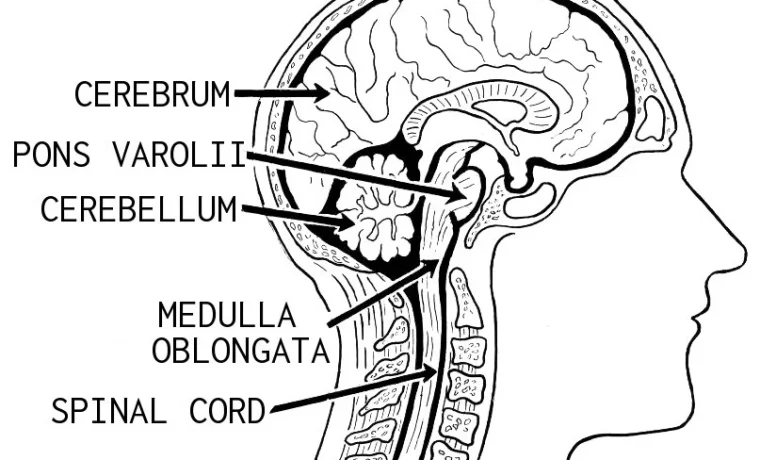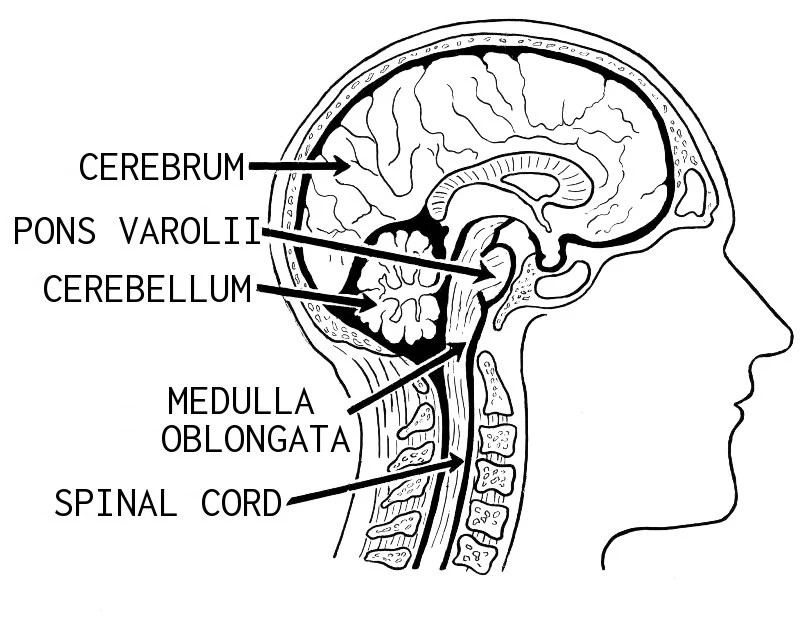
Cognitive performance is a family of outcomes: processing speed, working memory, attention, learning, executive control, and reasoning can change in different ways. Human trials of creatine have used several of these measures with mixed results. Some find modest improvements in demanding tasks, some find no effect, and a few suggest that baseline energy status or sleep loss changes who responds. Reviews through 2024 have not converged on a simple conclusion that creatine improves intelligence or everyday mental performance. The scientifically useful question is therefore not whether creatine is a smart drug, but which tested conditions produce a measurable benefit and how confident we can be in that result.
Brain creatine supports energy buffering
The brain uses glucose and oxygen to produce ATP, and ATP is needed for membrane potentials, neurotransmitter cycling, and other cellular work. Creatine supports rapid energy exchange between phosphocreatine and ADP through creatine kinase. Under normal conditions, the brain generally has ample oxidative energy supply, so a simple energy-starvation explanation for poor cognition is too strong. The more credible hypothesis is that creatine influences local ATP buffering under a high or changing demand, or changes how energy is distributed within cells.
That biochemical rationale does not determine whether a person will feel sharper. Brain creatine also acts as a solute that can influence osmotic balance, and it interacts with cellular stress signaling. These effects are biologically plausible but harder to connect to a particular test result. A cognitive trial must demonstrate a behavioral outcome, not merely a plausible pathway. Reviews therefore differ in their conclusions according to the tasks, populations, and quality criteria they prioritize.
Evidence across healthy adults is heterogeneous
A systematic review of randomized trials in healthy individuals found possible benefits for some cognitive domains, while emphasizing variations in dosing, duration, and participant characteristics. A 2024 meta-analysis in adults similarly found effects that differed across cognitive domains and was unable to support a uniform improvement in every measure. The 2003 vegetarian trial provides a clear positive example, while the 2011 vegetarian-omnivore comparison did not reproduce a simple dietary pattern. These studies show that a response can occur, but not that it follows a predictable rule for all healthy adults.
Task selection is especially important. A result on digit span, reaction time, or Raven's matrices cannot simply be relabeled as better focus, IQ, or job performance. Processing speed, accuracy, and memory are separable, and a faster response with unchanged accuracy is not equivalent to better reasoning. Many trials also use small convenience samples, short periods, and multiple cognitive outcomes, which can make isolated statistically significant results difficult to generalize. The most defensible summary is that creatine sometimes improves selected cognitive performance measures, but the magnitude and practical relevance remain uncertain.
Stress, diet, and age may define the response window
Several conditions make a brain-energy effect more plausible: low creatine intake, sleep deprivation, older age, or tasks with a high and rapidly changing demand. A small sleep-deprivation trial found less deterioration on some psychomotor and mood measures after creatine supplementation, yet it included only 19 adults and used an extreme, 24-hour deprivation protocol. That result cannot establish that creatine compensates for ordinary poor sleep. Similarly, reviews in older adults identify potential benefits in some domains but do not establish preservation of cognition or prevention of dementia.
Baseline diet is similarly complicated. Vegetarians may have lower average creatine availability, which can leave more room for supplementation, but they do not form a uniform response category. Some studies find benefits in vegetarians and others do not. This suggests that diet, baseline tissue status, genetics, and task selection interact rather than acting as a simple switch. Any claim that a particular supplement is necessary for mental sharpness should therefore be tested against an appropriate control group and a relevant outcome rather than inferred from a mechanism.
How to read the main study designs
The table below groups evidence by design rather than presenting a league table of findings. A single influential trial, a systematic review, and a critical appraisal can all be correct while emphasizing different limitations. The strongest design for a modest effect is usually a randomized, placebo-controlled, parallel-group trial with adequate power, a prespecified primary outcome, and sufficient washout in a crossover design. Brain-imaging or blood measures can support mechanism but do not replace behavioral outcomes.
Researchers also need to distinguish creatine from other ingredients. Some commercial combination products include caffeine or other compounds, so findings cannot be attributed to creatine if the comparator is not appropriate. Reliable product composition matters, and for monohydrate the research base is far deeper than for specialty forms. A study of a multi-ingredient product answers a different question from a trial of 3 to 5 grams of creatine monohydrate alone.
| Evidence type | What it can clarify | What it cannot establish | Overall interpretation |
|---|---|---|---|
| Small crossover RCT | Whether a task can change under controlled supplementation | Reliable population estimates or universal effects | Proof of concept only |
| Diet-group comparison trial | Whether vegetarians and omnivores respond differently | That diet group alone determines response | Findings are not uniform |
| Systematic review or meta-analysis | Overall pattern across domains and study quality | A single task-specific effect in every person | Effects are heterogeneous |
| Sleep-deprivation trial | Performance under an extreme energetic stressor | Compensation for ordinary sleep debt | Interesting but limited external validity |
Practical expectations and safety boundaries
For a healthy adult, if the goal is to test creatine on a meaningful cognitive routine, daily creatine monohydrate at 3 to 5 grams is consistent with most research protocols. Evaluation should occur over several weeks, not after one dose. Use a stable task, adequate sleep, a consistent caffeine routine, and the same testing conditions. Subjective impressions can be useful for safety but are weak evidence for cognitive efficacy because expectancy and attention to daily routines are powerful confounders. A personal trial is more informative when it separates the measured outcome from interpretation: record errors, completion time, or items recalled under a fixed protocol, and note any change in sleep or caffeine beside it. This prevents a difficult Tuesday from being rewritten as a treatment failure or an easy morning as proof of effectiveness. A change that requires an elaborate charting ritual may be too small to have practical value, even if it is statistically detectable in a research group. A clear result should also remain useful when the measurement tool or daily context changes.
Creatine should never be used to push through severe sleep deprivation, an unusually demanding work period, or symptoms of illness. New or worsening concentration problems can reflect sleep disorders, anxiety, depression, medication effects, anemia, thyroid disease, or other causes needing assessment. People who are pregnant, minors, have kidney disease, or take medication that affects renal function require individual professional guidance before supplementation. The current evidence supports cautious curiosity, not a general prescription for better thinking.
Frequently asked questions
Does creatine make you smarter?
There is no consistent human evidence that it raises intelligence. Some studies find improvement on specific processing, memory, or reasoning tasks, while other domains and studies show little or no effect.
Which cognitive tasks may respond most?
Demanding tasks that rely on rapid processing or working memory are more often studied and may respond under particular conditions. Simple tasks, everyday productivity, and every component of cognition do not show a uniform response.
Does creatine help when I am sleep-deprived?
A small controlled study suggests it may reduce deterioration on some measures during total sleep deprivation, but that does not show that it corrects ordinary sleep debt. Restoring sleep remains the primary intervention.
Is daily creatine useful for studying?
It is reasonable to test if a healthy adult is already interested in creatine, but there is no strong evidence for an acute pre-exam dose or a guaranteed study benefit. Judge any effect over weeks on a stable task, not on one difficult session.
Limitations
- Cognitive outcomes and protocols vary widely, so pooled averages conceal meaningful differences between tasks and populations.
- Many trials are small, short, or involve young adults, limiting confidence in older adults and diverse populations.
- A cognitive association does not establish a mechanism, and reported group differences do not predict an individual's response.
References
Effects of Creatine Supplementation on Brain Function and Health. — source record
Creatine supplementation research fails to support the theoretical basis for an effect on cognition: Evidence from a systematic review. — source record
Effects of creatine supplementation on cognitive function of healthy individuals: A systematic review of randomized controlled trials. — source record
The effects of creatine supplementation on cognitive function in adults: a systematic review and meta-analysis. — source record
The influence of creatine supplementation on the cognitive functioning of vegetarians and omnivores. — source record
Effect of creatine supplementation and sleep deprivation, with mild exercise, on cognitive and psychomotor performance, mood state, and plasma concentrations of catecholamines and cortisol. — source record
The Additive Effects of Creatine Supplementation and Exercise Training in an Aging Population: A Systematic Review of Randomized Controlled Trials. — source record
Oral creatine monohydrate supplementation improves brain performance: a double-blind, placebo-controlled, cross-over trial. — source record
Bioavailability, Efficacy, Safety, and Regulatory Status of Creatine and Related Compounds: A Critical Review. — source record
Common questions and misconceptions about creatine supplementation: what does the scientific evidence really show? — source record
Effect of creatine supplementation on kidney function: a systematic review and meta-analysis. — source record
Last updated: 2026-11-24