Memory is not a single outcome, and studies that use the word cognition may test very different abilities. Creatine has been examined in working memory, immediate and delayed recall, recognition, learning, and fluid reasoning. The evidence is therefore more useful when the specific task, population, dosing schedule, and baseline diet are considered. A 2003 crossover trial in young vegetarians reported improvements in backward digit span and Raven's matrices, while subsequent studies and reviews have produced a more mixed picture. The honest conclusion is that creatine can affect performance on some memory-demanding tasks in some settings, but it is not established as a general nootropic or a treatment for memory decline.
Why brain energy is a plausible target
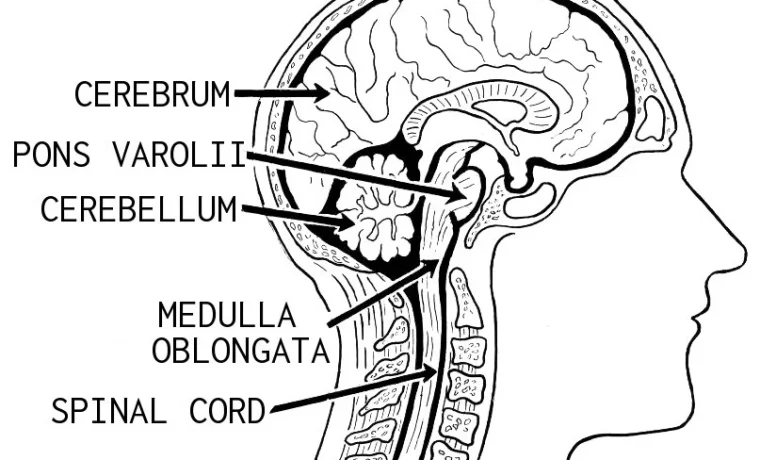
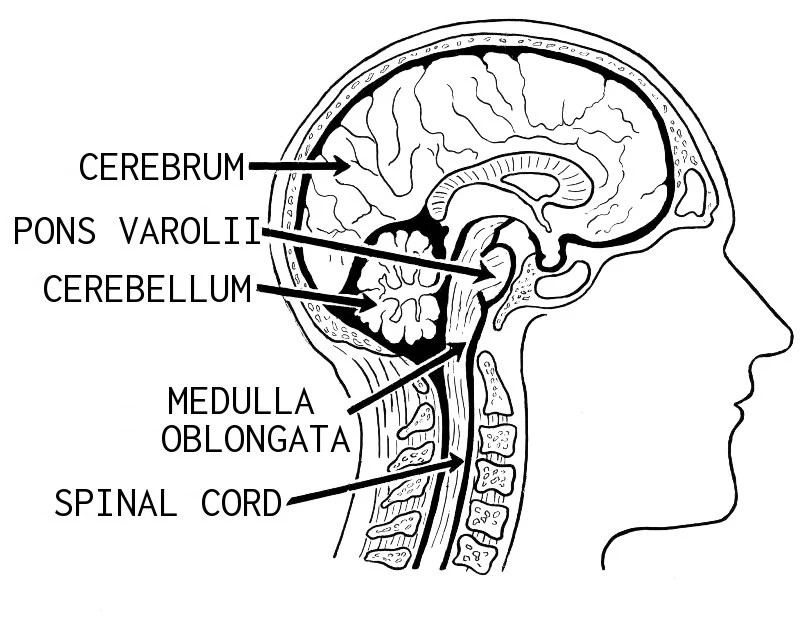
Brain tissue has high and fluctuating energy demands, especially during demanding attention and processing tasks. Creatine is present in the brain and participates in buffering cellular ATP through the creatine kinase system. The idea is not that the brain runs out of ATP in healthy people under ordinary conditions, nor that more creatine automatically makes memory better. Rather, changes in brain energy dynamics could affect performance during stress, sleep deprivation, low dietary intake, aging, or particular tasks that create a high processing load.
The mechanism makes targeted testing reasonable. It does not predict which test will improve or how large the benefit will be. Memory tasks are influenced by practice, sleep, motivation, baseline ability, caffeine, and the laboratory environment. A placebo-controlled design can reduce some of those influences, but small samples and multiple outcomes still make it difficult to isolate a modest true effect from chance findings. Human evidence should therefore be organized by task and population rather than summarized as a single yes or no.
The influential vegetarian trial was promising but narrow
Rae and colleagues used a double-blind, placebo-controlled crossover design in 45 young adult vegetarians. Participants received 5 grams per day for six weeks in each condition, and the study reported significant improvements in backward digit span, a working-memory task, and Raven's Advanced Progressive Matrices, a reasoning and fluid-intelligence measure. Because participants were vegetarians, lower dietary creatine and potentially lower baseline brain creatine were part of the rationale.
The result was an influential proof of principle, not a general guarantee. The sample was relatively small and young, the trial tested two conditions with six-week periods, and both outcomes emphasized processing speed. Carryover, period effects, and multiple testing remain considerations even in a crossover design. The study does not show that omnivores receive no benefit, that memory improves in older adults, or that taking creatine prevents dementia. It supports continued, more rigorous testing in memory-limited populations.
Later trials expanded the picture and weakened simple claims
A 2011 trial compared creatine supplementation in vegetarians and omnivores using cognitive tasks. It was designed to determine whether dietary status modifies response, yet the pattern of results was not a simple story about vegetarians benefiting more. In that study, creatine did not consistently improve performance on the selected memory measures, although other aspects of cognition may have responded. The relevance is methodological as much as biological: baseline diet is one factor, not a guaranteed predictor of benefit.
Systematic reviews have reached varying conclusions because studies differ in duration, dose, population, baseline creatine intake, and task selection. A 2023 memory meta-analysis examined randomized trials and reported evidence across memory outcomes, while a 2024 cognition meta-analysis found effects in adults that were heterogeneous across domains. A contemporaneous critical review argued that the theoretical basis for a general cognitive effect was not consistently supported. Taken together, these reviews favor a qualified statement: creatine may improve some cognitive and memory outcomes, but effect size, task specificity, and the conditions under which a benefit appears remain unsettled.
Which memory outcomes are most plausible to change?
Tasks that impose a high processing load, require rapid information updating, or occur under energetic stress are more biologically and methodologically plausible candidates than effortless recall after ample rest. Working memory and complex reasoning occupy this space, while simple delayed recall may be less sensitive to modest energy effects. That does not mean a person should self-select a test and assume the mechanism applies. Practice effects can make repeated testing look better, and no single laboratory task perfectly represents everyday memory.
Table below summarizes the main human evidence rather than ranking products or declaring a winner. Study size, duration, and dietary background all affect interpretation. The most persuasive future evidence would use preregistered outcomes, adequate power, blinded testing, washout periods, and measures that separate memory from speed, attention, and motivation. Until then, a practical experiment should track one stable task over time and avoid interpreting a single high score as proof of a treatment effect.
Baseline ability creates another interpretive challenge. A ceiling effect can hide a benefit in a highly practiced participant, while a floor effect can make an improvement easy to demonstrate in a struggling participant. Learning effects work in the opposite direction, rewarding whoever is tested later. The strongest studies counter these problems with parallel groups, counterbalanced crossover periods, familiarization sessions, and tasks that do not rely on remembering previous test items. People assessing their own memory face all of those problems plus expectancy. If someone uses flashcards or a learning app, improvement may come from repeated retrieval, which is precisely the kind of practice that should accompany, rather than be attributed solely to, a supplement.
| Population or design | What was studied | Signal in the evidence | Important limitation |
|---|---|---|---|
| 45 young vegetarians, crossover RCT | Backward digit span and Raven's matrices | Reported improvement in processing speed and working memory | Small, young sample; two main outcomes; generalizability limited |
| Vegetarians and omnivores, randomized study | Several cognitive and memory tasks | No consistent memory advantage across the chosen tests | Diet group did not determine a uniform response pattern |
| Healthy adults, systematic reviews | Memory and broader cognition across varied protocols | Some domains show possible improvement; other analyses are mixed | Task and dose heterogeneity makes pooling difficult |
| Older adults or stressed populations | Aging, sleep loss, illness, or demanding environments | Mechanistic rationale persists, but direct memory evidence is limited | Most data cannot be generalized across age or clinical status |
How to use the evidence without overpromising
For a healthy adult interested in a defined task, repeated use of 3 to 5 grams of creatine monohydrate daily is the most studied approach. Most trials used sustained dosing because a single serving cannot rapidly establish a brain tissue response. Timing relative to learning or testing is not well established, and using a large dose only before an exam is not supported by the trial pattern. Adequate sleep, practice, and a challenging but appropriate study routine remain more dependable foundations for memory performance.
Creatine should not be used to mask the effects of sleep deprivation, anxiety, attention problems, or depression. Persistent memory change can reflect medical, nutritional, or psychiatric causes that deserve assessment. Pregnancy, kidney disease, medication use affecting renal function, and use by minors each require individualized professional guidance. A possible small benefit on a laboratory task is not enough to justify unsupervised use in any of those groups.
Frequently asked questions
Does creatine improve memory for everyone?
No. Some human trials report improvement in selected working-memory or reasoning tasks, while other studies and reviews find mixed or null results. Effects appear to depend on population, task, baseline status, and study design.
Do vegetarians benefit more from creatine for memory?
They may have more room to increase tissue creatine, and the influential 2003 trial found benefits in young vegetarians. Later evidence does not show a uniform advantage for vegetarians, so this remains a hypothesis rather than a guarantee.
How long should I take creatine before judging memory effects?
Most cognitive trials used daily supplementation for several weeks, commonly six weeks. A single dose is not well supported for a memory effect, and no single test can reliably establish whether an individual has improved.
Can creatine prevent dementia or treat memory loss?
No established evidence supports that claim. Creatine has been studied in healthy or clinical populations, but it is not a treatment for dementia, and new-onset or progressive memory changes should be medically evaluated.
Limitations
- Cognitive trials are generally small and use laboratory tasks whose results may not generalize to everyday memory.
- Outcomes, doses, durations, and baseline diets vary, producing heterogeneous findings and publication-related uncertainty.
- Evidence is limited for older adults, people with dementia, sleep-deprived individuals, and people with high dietary creatine intake.
References
Effects of Creatine Supplementation on Brain Function and Health. — source record
Oral creatine monohydrate supplementation improves brain performance: a double-blind, placebo-controlled, cross-over trial. — source record
Effects of creatine supplementation on cognitive function of healthy individuals: A systematic review of randomized controlled trials. — source record
The influence of creatine supplementation on the cognitive functioning of vegetarians and omnivores. — source record
Effects of creatine supplementation on memory in healthy individuals: a systematic review and meta-analysis of randomized controlled trials. — source record
The effects of creatine supplementation on cognitive function in adults: a systematic review and meta-analysis. — source record
Creatine supplementation research fails to support the theoretical basis for an effect on cognition: Evidence from a systematic review. — source record
Common questions and misconceptions about creatine supplementation: what does the scientific evidence really show? — source record
Last updated: 2026-11-24