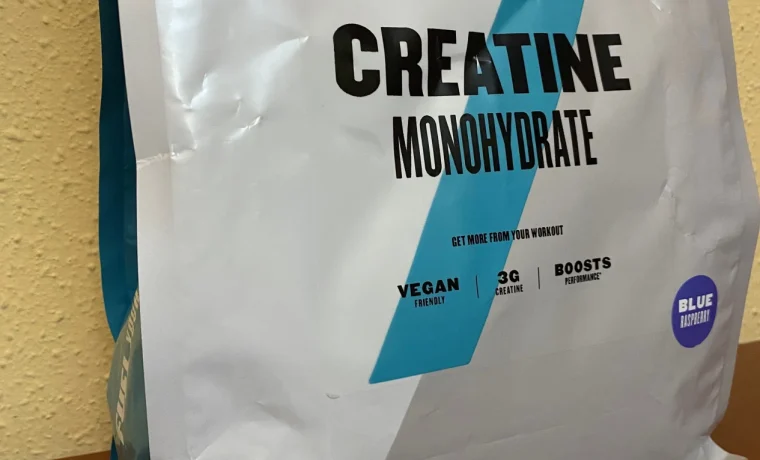
Micronized creatine is marketed as a more dissolvable or better-absorbed version of creatine monohydrate. The term refers to particle size, not a different active ingredient. That distinction is important for evidence: if the chemistry is the same, a performance advantage must be demonstrated in direct comparisons rather than inferred from words such as 'ultra' or 'advanced.'
What micronization actually changes
Micronization reduces particle size, which can change how a powder disperses in liquid and how it feels to consume. It does not change the fact that the active compound is creatine monohydrate. Finer particles may mix more readily and avoid some gritty texture, which is a usability advantage for people who otherwise dislike creatine powder. The key practical question is whether this difference translates into meaningfully higher muscle creatine or better outcomes than standard monohydrate.
The evidence reviews on common creatine misconceptions conclude that micronized monohydrate has not been shown to outperform standard monohydrate in a clinically meaningful way. Plausible mechanisms and superior mixing are not the same as demonstrated performance benefit. A product can be a pleasant choice for adherence while still sharing the established evidence base of monohydrate rather than adding a new effect.
Comparing the forms fairly
A fair comparison requires the same chemical form, similar purity, a dose that actually saturates muscle stores, and enough time for adaptation. Studies using different doses, schedules, or definitions of 'better' make the comparison difficult. Since standard monohydrate already raises muscle creatine effectively in most people, another form has little room to improve absorption unless it produces a clinically relevant additional effect under controlled conditions.
Differences in subjective experience may matter more than small changes in laboratory measures. Some consumers report that micronized powder mixes better or causes less stomach discomfort, while others notice no difference. Those reports are useful for personal choice but not proof of superior efficacy. Third-party testing and accurate labeling remain more important than particle size, because identity and purity problems can undermine any potential advantage.
A practical verdict
For a healthy adult choosing creatine, standard monohydrate is the reference option because it underlies the research. Micronized monohydrate is a reasonable alternative for mixing or taste, and it can be judged by the same principles: 3 to 5 grams daily, consistent use, progressive training, and a trial lasting several weeks. There is little reason to pay a large premium for a product whose main distinction is particle size without direct evidence of added benefit.
Safety expectations should not change because a product is labeled micronized. The studies and safety reviews largely concern monohydrate, so they are the best guide. People with kidney disease, pregnancy, minors, or relevant medication use should seek individualized advice. Stop and seek care for severe or persistent digestive symptoms, significant swelling, dark urine, or marked weakness rather than trying to determine the cause from online claims.
| Point | Evidence-based context |
|---|---|
| What this guide covers | Micronized Creatine: Does It Work Better? |
| Core takeaway | Micronized creatine is still creatine monohydrate; the process may improve mixing, but good evidence does not show a reliable performance advantage over standard monohydrate. |
| Evidence boundary | Most creatine studies involve healthy adults; read the limitations for population boundaries. |
| Source standard | 4 traceable scientific source(s) are listed with the article. |
Frequently asked questions
Is micronized creatine more effective?
No reliable evidence shows a clinically meaningful performance advantage over standard creatine monohydrate. Micronization may improve mixing and texture, which can improve adherence, but that is different from greater efficacy.
Does micronized creatine absorb faster?
Absorption may differ at a mechanistic level, but creatine monohydrate already saturates muscle stores effectively with regular use. A faster absorption claim has not established better long-term outcomes in strong head-to-head trials.
Is micronized creatine safer?
It is the same active compound, so standard monohydrate safety evidence is the relevant guide. Individual tolerability can vary, and third-party testing matters more than the word 'micronized' for product quality.
Limitations
- Direct comparative trials are limited and product formulations are not always well characterized.
- Subjective mixing or tolerance differences can drive preference without changing efficacy.
- Evidence for creatine generally concerns monohydrate, so alternative-form claims require careful extrapolation.
References
Common questions and misconceptions about creatine supplementation: what does the scientific evidence really show? — source record
Part II. Common questions and misconceptions about creatine supplementation: what does the scientific evidence really show? — source record
International Society of Sports Nutrition position stand: safety and efficacy of creatine supplementation in exercise, sport, and medicine. — source record
Effect of creatine supplementation on body composition and performance: a meta-analysis. — source record
Last updated: 2026-11-24