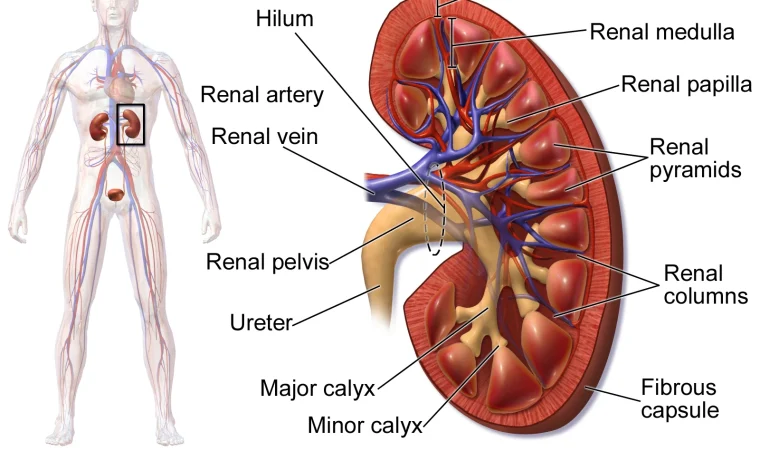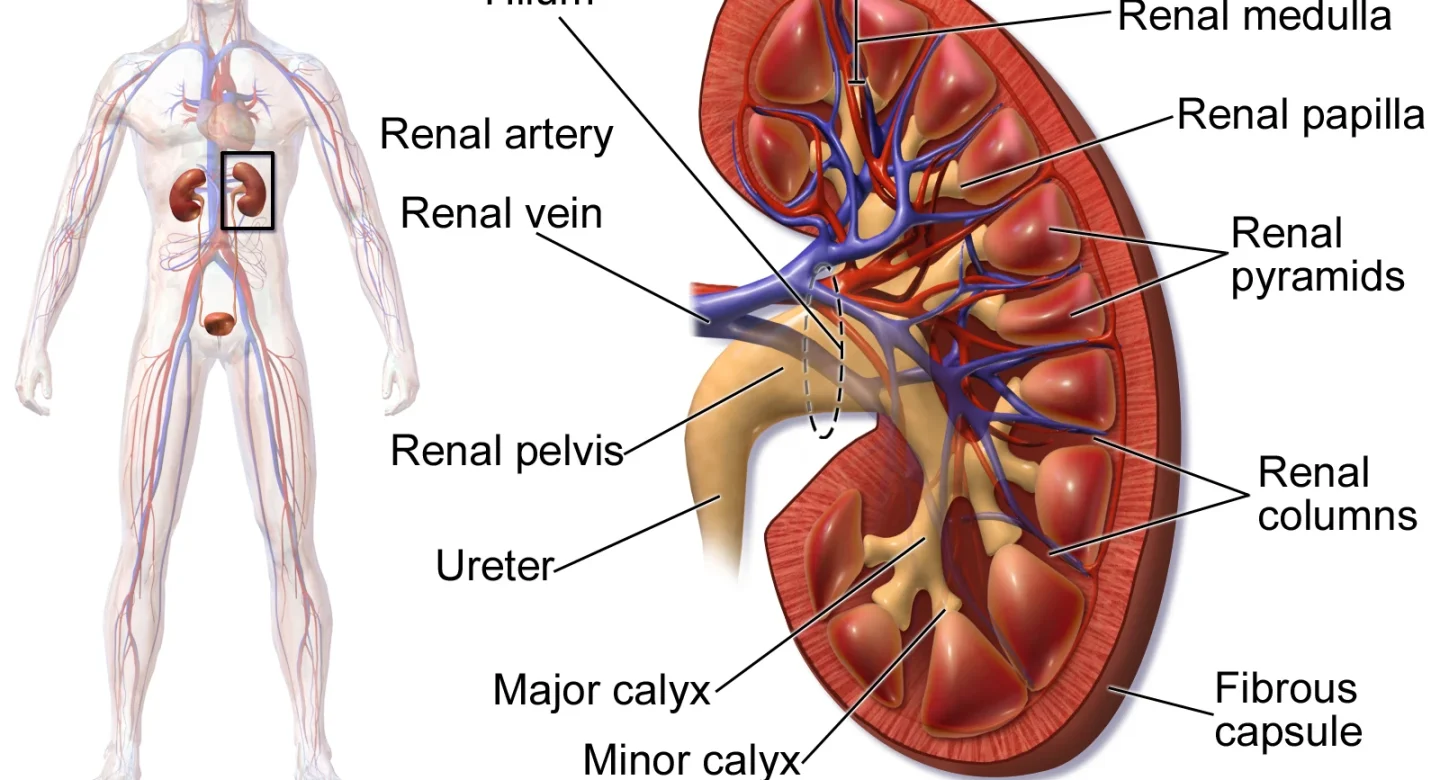
A rising serum creatinine after starting creatine can be alarming because creatinine is often used to estimate kidney filtration. The laboratory signal, however, has two possible origins. It can reflect increased production of creatinine from creatine, and creatine may also alter the kidney's handling of filtered creatinine. Either can raise the blood value without reducing glomerular filtration. That is why an isolated creatinine change after supplementation is not equivalent to acute kidney injury. Interpreting it responsibly requires a timeline, the absolute value, the estimated filtration method, other kidney markers, hydration context, and follow-up. The same careful interpretation applies to kidney disease, pregnancy, minors, and medication use.
Serum creatinine is a filtration marker and a metabolite
Creatinine is a waste product generated from creatine in muscle. It circulates in blood and is filtered by the kidneys, with a small amount secreted by renal tubules. Higher concentrations can occur when filtration falls, but serum creatinine also reflects how much the body produces. Muscular individuals, recent heavy exercise, meat intake, and creatine supplementation can affect production. The marker is useful because it is inexpensive and widely standardized, but it is not a direct measurement of filtration.
Estimated glomerular filtration rate, or eGFR, commonly uses serum creatinine. That calculation can therefore inherit a supplement-related change in creatinine. Cystatin C is produced more steadily by many cells and is less dependent on muscle mass, so a clinician may use it when creatinine-based estimation is questionable. No single laboratory value should be interpreted without the clinical context, and no supplement should be used to lower a creatinine result without identifying why it changed. Reference ranges describe a population, not the complete interpretation of one person's result.
Creatine conversion can raise the value without injury
When a person takes creatine, total body creatine rises. More creatine is available for spontaneous conversion to creatinine, so creatinine production can increase and the blood concentration may rise even if kidney filtration is stable. Creatine also has effects on renal tubular handling, including increasing the amount of creatinine secreted after it is filtered. In either case, the serum value can overstate a reduction in filtration because the denominator of a creatinine-based calculation is altered.
This is not a claim that creatinine can never be clinically important. A new or rapidly changing value still requires assessment. The interpretive pattern is different from a stable mild rise in an otherwise healthy person after a known supplement start. Kidney injury is assessed through the combination of creatinine change, filtration estimate, urine output, volume status, symptoms, urine albumin, and other tests when indicated. No supplement should be used to delay that assessment.
Research reviews describe stable filtration in healthy users
A 2019 systematic review and meta-analysis examined renal outcomes in creatine users, and a 2025 meta-analysis updated the evidence on kidney function. Reviews generally found no clinically meaningful deterioration in glomerular filtration in healthy participants, although changes in serum creatinine could occur. The studies measured filtration in different ways and included varied doses, training diets, and follow-up periods. Some direct evidence still relies on estimated GFR rather than measured GFR, an important gap when creatinine itself is the variable being affected.
A separate review of resistance-trained individuals consuming a high-protein diet found no long-term impairment of kidney function. That population is relevant because high protein intake, creatine, and training often coexist, but the study cannot establish safety for people with existing kidney disease. Safety evidence is strongest when product purity, hydration, diet, and health status are reasonably controlled. It should not be stretched into a guarantee for every dose, every product, or every clinical circumstance.
How to interpret a laboratory result in context
The table below offers a framework, not a substitute for clinical interpretation. The first question is whether the value changed after creatine initiation and by how much. Next, compare it with a prior baseline, consider hydration and recent muscle activity, and determine whether eGFR was based on creatinine alone. A clinician may request repeat testing, cystatin C-based eGFR, urine albumin-to-creatinine ratio, urinalysis, or other assessment. Medication and kidney history change the risk picture, and pregnancy changes both interpretation and the need for medical guidance.
Creatine monohydrate from a reputable source is the product with the clearest renal safety record. Contamination and inaccurate labeling are separate risks. If a result is unexpectedly high, if kidney function declines, if urine output falls, or if there is swelling, severe weakness, vomiting, confusion, or dark urine, seek prompt medical care rather than assuming supplement effect. A mild creatinine shift can be expected; an unexplained or progressive pattern still deserves assessment.
| Laboratory context | Possible interpretation | Useful next step | Red flags |
|---|---|---|---|
| Small stable creatinine rise after starting creatine; no symptoms; normal eGFR | Conversion or tubular handling effect is plausible | Repeat testing and discuss context with a clinician | Rapid rise, low urine output, swelling, severe symptoms |
| eGFR appears reduced but urine albumin and clinical picture are reassuring | Creatinine-based estimate may be misleading | Consider cystatin C-based assessment | Confirmed declining filtration or additional abnormalities |
| Creatinine elevated before supplementation | May reflect production, muscle mass, diet, or kidney disease | Review baseline and broader kidney assessment | Unexplained progressive change |
| Known kidney disease or nephrotoxic medication | Risk and interpretation differ from healthy-user studies | Obtain clinician approval and monitoring plan | Any worsening symptoms or labs |
Safety advice for higher-risk groups
Healthy adults using standard doses of creatine monohydrate generally have a reassuring renal safety record. That conclusion should not be applied automatically to someone with chronic kidney disease, reduced filtration, recurrent kidney stones, a structural urinary problem, diabetes-related kidney disease, or a history of acute kidney injury. These individuals should ask a nephrologist or other qualified clinician before supplementing and may need a documented monitoring plan.
A review visit should include the brand and form of creatine, the dose, start date, exercise and protein intake, hydration, and every medication or over-the-counter product. That information allows a clinician to look for alternative explanations and choose whether repeat creatinine, cystatin C, urine albumin, or urinalysis would change management. If monitoring is appropriate, agreement in advance about when tests will be repeated avoids both unnecessary anxiety and missed follow-up. The goal is not to prove that creatine is harmless; it is to make a reversible supplement decision measurable and safe. A clear stopping rule also helps: if the clinical plan changes or an abnormality appears, the clinician can advise whether to pause, continue with monitoring, or discontinue rather than leaving the decision to guesswork.
Pregnancy and minors also require different standards: safety studies in those groups are not equivalent to healthy-adult evidence. Medication use deserves the same caution, especially for drugs that affect kidney filtration or hydration. The appropriate action is to provide the complete supplement and medication list to a clinician, not to hide a supplement because it seems harmless. The purpose of monitoring is to distinguish a known laboratory conversion signal from true changes in renal health and to adjust the plan safely.
Frequently asked questions
Does creatine cause kidney injury?
Available evidence does not show meaningful kidney injury in healthy adults at standard doses, but creatinine can rise as a conversion signal without reduced filtration. A new or worsening lab pattern still needs medical evaluation.
Why did my creatinine rise after creatine?
Increased creatine availability can increase creatinine production, and creatine can affect tubular creatinine secretion. Either may raise serum creatinine while filtration remains stable, which can make a creatinine-based eGFR look lower.
Should I stop creatine before a blood test?
Do not stop or start a supplement solely to manipulate a test unless your clinician instructs you. Tell the laboratory and clinician when you started creatine so they can interpret the result; temporary withholding may be useful when explicitly advised.
What if I have kidney disease?
Ask a qualified clinician before using creatine. Healthy-person studies do not establish safety for kidney disease, and monitoring or an individualized dose may be necessary.
Limitations
- Much of the safety evidence uses creatinine-based estimated filtration rather than directly measured GFR, leaving some uncertainty about small hemodynamic effects.
- Studies vary in dose, product quality, diet, hydration, follow-up, and health status, so a short healthy-adult study cannot establish universal long-term safety.
- Laboratory interpretation is clinical and context dependent; an isolated number cannot distinguish all causes or rule out kidney disease.
References
Nutritional and Non-Nutritional Strategies in Bodybuilding: Impact on Kidney Function — source record
Effects of Creatine Supplementation on Renal Function: A Systematic Review and Meta-Analysis. — source record
Common questions and misconceptions about creatine supplementation: what does the scientific evidence really show? — source record
Effect of creatine supplementation on kidney function: a systematic review and meta-analysis. — source record
Does long-term creatine supplementation impair kidney function in resistance-trained individuals consuming a high-protein diet? — source record
Creatine supplementation and kidney function in healthy, physically active adults: a systematic review and meta-analysis and the evidence gap in directly measured glomerular filtration — source record
Risk of Adverse Outcomes in Females Taking Oral Creatine Monohydrate: A Systematic Review and Meta-Analysis. — source record
Last updated: 2026-11-24