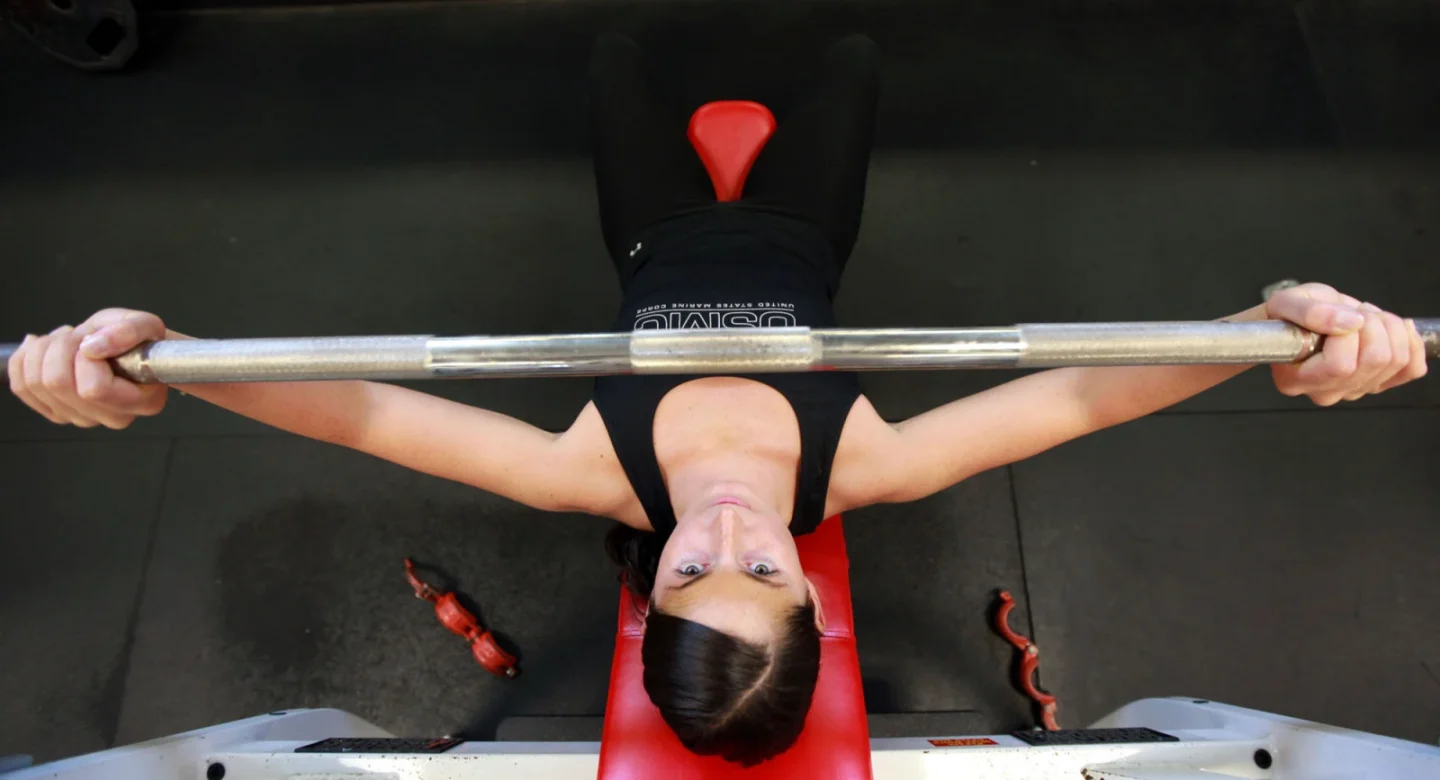
Muscle growth is often reduced to a single number on a scale, yet the underlying biology is more complicated. Creatine may increase training capacity and total work performed, which can create the conditions for more lean tissue. Reviews find the clearest growth benefit when creatine is combined with resistance training; creatine alone is not a reliable muscle-building intervention.
How creatine can support hypertrophy
Hypertrophy is the enlargement of muscle cells through repeated mechanical tension and protein-supported repair. Creatine does not act like an anabolic steroid and does not directly drive protein synthesis. Its plausible contribution is indirect: by supporting repeated high-intensity sets, it may increase training volume and allow greater mechanical tension over a training cycle, which then supports growth.
A 2022 meta-analysis of 35 randomized trials found that creatine increased lean body mass overall, but the stronger pattern appeared when creatine was paired with resistance training. When supplementation was not paired with a clear training effect, the average change was not statistically significant. This distinction matters: the growth signal is an addition to training, not evidence that a scoop of powder can replace the program.
What lean mass actually means
Early body-mass increases after creatine often reflect additional intracellular water associated with higher muscle creatine. That is not the same as new contractile muscle or body fat. Longer resistance-training trials can show a larger lean-tissue gain, and a 2017 meta-analysis in older adults found that creatine plus resistance training produced more lean tissue than resistance training alone.
Measurements such as dual-energy X-ray absorptiometry estimate lean tissue but are influenced by hydration, so small short-term shifts should not be overinterpreted. Waist circumference, standardized photos, strength progression, and training logs can provide a more useful picture. If fat mass rises, the likely explanation is a sustained calorie surplus rather than creatine directly converting nutrients into fat; supplements do not override energy balance.
Who is most likely to see a growth benefit?
People with lower baseline muscle creatine stores, including many vegetarian or vegan athletes and some people with larger body mass, may respond more strongly because their starting point is farther from saturation. This is a plausible dietary explanation, not a guarantee. Training status also matters: beginners and trained lifters can both gain, although the size and pattern of the response may differ.
For healthy adults, regular creatine monohydrate at 3 to 5 grams per day is the best-supported approach; a loading phase is optional. Adequate protein and calories remain necessary, as does progressive training. People who are minors, pregnant, have kidney disease, or use medicines relevant to kidney function should discuss supplementation with a qualified clinician rather than apply a generic adult protocol.
| Point | Evidence-based context |
|---|---|
| What this guide covers | Creatine and Muscle Growth: Does Creatine Build Muscle? |
| Core takeaway | Creatine may support lean-mass and strength gains when paired with resistance training, but it does not replace mechanical tension, protein, or calories. |
| Evidence boundary | Most creatine studies involve healthy adults; read the limitations for population boundaries. |
| Source standard | 4 traceable scientific source(s) are listed with the article. |
Frequently asked questions
Does creatine cause hypertrophy without lifting?
Probably not in a meaningful, reliable way. The best evidence for increased lean mass comes from adding creatine to resistance training. Creatine may support performance and training capacity, but it cannot manufacture the mechanical tension needed for muscle growth.
Is early weight gain from creatine fat?
Usually not. A common early increase is intracellular water within muscle, not body fat. Longer studies can show additional lean-tissue growth when resistance training is present, while fat gain generally reflects a calorie surplus.
Should vegetarians use creatine?
Creatine monohydrate can be a practical way to raise intake when dietary creatine is low or absent. Response varies, and vegetarians are not guaranteed to gain more than omnivores, but the safety profile at standard doses is well studied in healthy adults.
Limitations
- Lean-mass estimates can be affected by hydration changes, especially early in supplementation.
- Growth studies vary in diet, training, duration, and methods for measuring lean tissue.
- A positive average response does not predict the same magnitude of gain for every individual.
References
Influence of age, sex, and type of exercise on the efficacy of creatine supplementation on lean body mass: A systematic review and meta-analysis of randomized clinical trials. — source record
Effect of creatine supplementation on body composition and performance: a meta-analysis. — source record
Effect of creatine supplementation during resistance training on lean tissue mass and muscular strength in older adults: a meta-analysis — source record
International Society of Sports Nutrition Position Stand: protein and exercise — source record
Last updated: 2026-11-24

