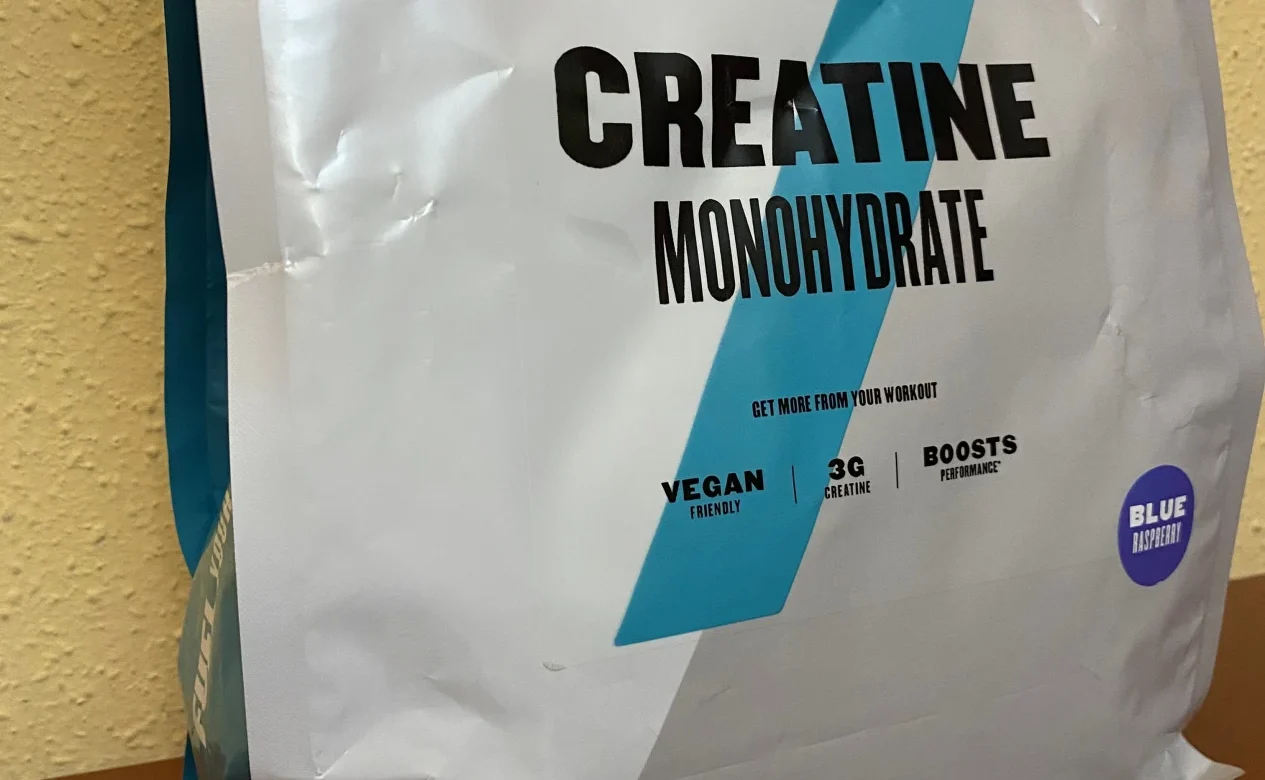
Creatine monohydrate is the form used in most controlled research and the basis for safety recommendations. Its simplicity is a scientific advantage: researchers know what was administered, can compare studies, and can test alternative forms against a well-characterized reference. When a premium product claims to work better, the relevant question is whether head-to-head evidence demonstrates a clinically meaningful advantage.
Why monohydrate is the reference form
Creatine monohydrate is creatine bound to one molecule of water, the form that circulates and is stored in muscle. Oral monohydrate reliably raises intramuscular creatine stores. The 2017 ISSN position stand and later evidence reviews base their practical recommendations mainly on monohydrate because the evidence base is broad and includes randomized trials, long-term safety observations, and comparisons with other forms. Strong, simple evidence is a reason to choose it, not a reason to be suspicious of it.
Monohydrate is also stable and relatively inexpensive, which makes consistent dosing practical. Powder can be mixed into water, juice, or a familiar drink. Flavoring does not change the active chemistry, and a flavored product can improve adherence for someone who will not swallow an unflavored scoop. The more important checks are accurate serving size, transparent labeling, and independent testing for purity rather than an elaborate flavor story.
What monohydrate can reasonably deliver
The established benefits include supporting repeated high-intensity exercise, resistance-training volume, strength, and lean-tissue gains when training is present. Reviews and meta-analyses do not support using creatine for every endurance goal, for cognition as a guaranteed broad enhancer, or as a replacement for protein, food, or training. Benefits depend on consistent saturation, task type, and program design, and individual responses vary.
For a healthy adult, 3 to 5 grams per day is the usual recommendation. An optional loading phase of about 20 grams per day for five to seven days can raise stores sooner but often produces a faster water-weight increase and more digestive discomfort. There is little reason to use a loading phase solely because marketing describes it as necessary. For a first trial, a steady dose is simpler and makes long-term adherence easier.
Safety and product verification
Adverse effects are uncommon in healthy adults at standard doses. Early intracellular water gain can raise scale weight, and some people experience stomach discomfort, nausea, or loose stools, particularly with large single doses. Dividing the dose and taking it with food may help. Reviews do not show consistent dehydration, heat strain, or cramping, but fluid-balance conditions, kidney disease, pregnancy, minors, and relevant medications require individualized review.
Because supplements are not approved like medicines before sale in the United States, independent batch testing offers an added safeguard against contamination and inaccurate labeling. Look for a certificate from a credible program and verify the lot if possible. Do not assume a different chemical name makes a product superior. For most consumers seeking the best-evidenced creatine effect, a plain, accurately labeled, third-party-tested monohydrate powder is the evidence-first choice.
| Point | Evidence-based context |
|---|---|
| What this guide covers | Creatine Monohydrate: Evidence, Benefits, and Safety |
| Core takeaway | Creatine monohydrate has the deepest evidence base and serves as the reference against which other forms should be compared, not merely the cheapest option. |
| Evidence boundary | Most creatine studies involve healthy adults; read the limitations for population boundaries. |
| Source standard | 4 traceable scientific source(s) are listed with the article. |
Frequently asked questions
Why is creatine monohydrate considered the best form?
Most high-quality creatine trials use monohydrate, so it has the largest and most consistent evidence base for effectiveness and safety. Alternative forms must show a meaningful advantage in direct comparisons before that conclusion changes.
Is micronized creatine better than regular monohydrate?
Micronization changes particle size but not the active chemical. It can improve mixing, and any difference in tolerability or absorption has not been shown to create a reliable performance advantage in good head-to-head evidence.
How much creatine monohydrate should I take?
Most healthy adults use 3 to 5 grams daily. Loading is optional. Higher amounts are not automatically more effective and can increase early water-weight gain or digestive discomfort.
Limitations
- Research mainly uses monohydrate, so evidence for other forms cannot be inferred from it.
- Individual benefits and tolerability vary.
- Regulatory and batch-testing systems do not guarantee that every product is pure or appropriate for every consumer.
References
International Society of Sports Nutrition position stand: safety and efficacy of creatine supplementation in exercise, sport, and medicine. — source record
Common questions and misconceptions about creatine supplementation: what does the scientific evidence really show? — source record
Part II. Common questions and misconceptions about creatine supplementation: what does the scientific evidence really show? — source record
Effect of creatine supplementation on body composition and performance: a meta-analysis. — source record
Last updated: 2026-11-24