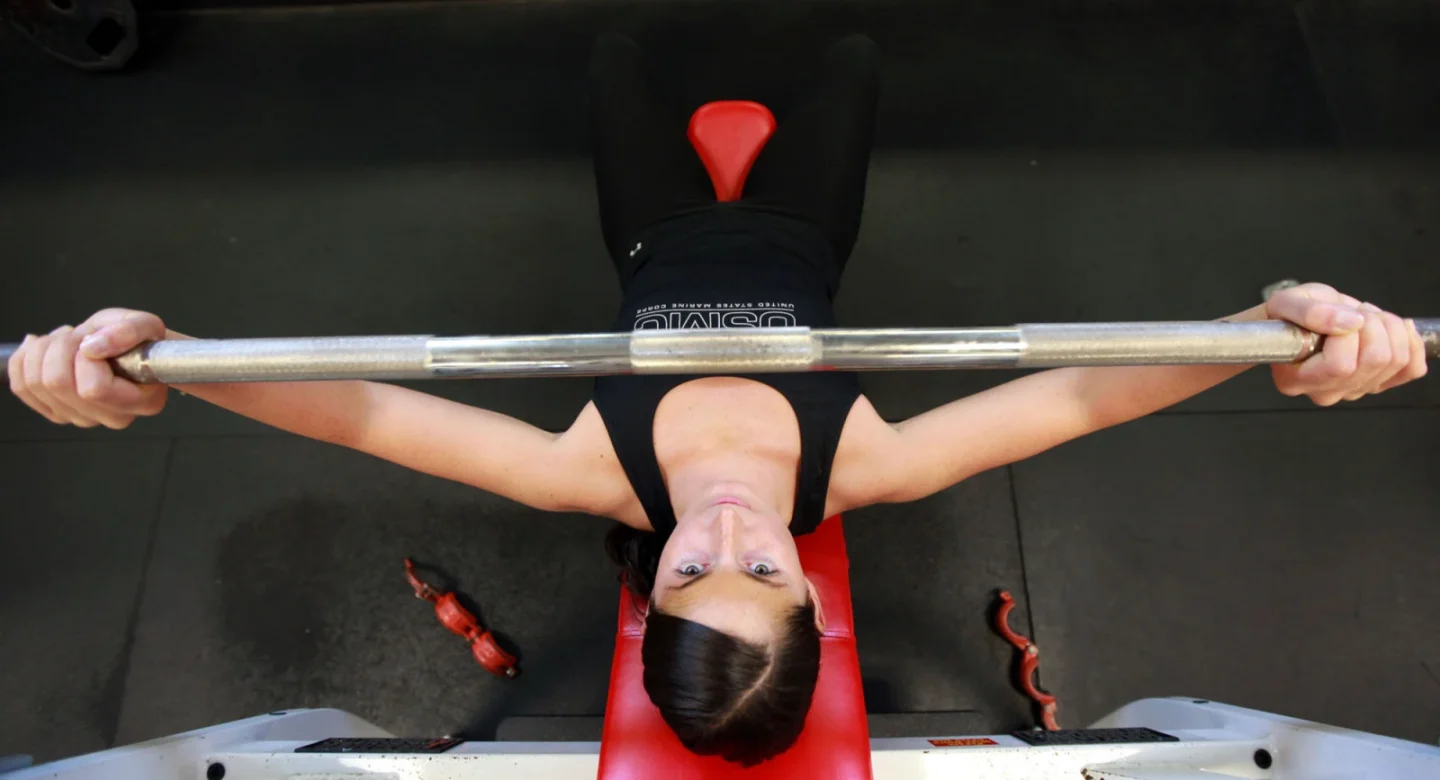
A supplement can be safe and useful without changing every sport in the same way. Creatine is a good example: evidence is strongest for repeated short, hard efforts and resistance training, while outcomes for prolonged aerobic work are inconsistent. The type of energy demand and the training program matter more than a simple yes-or-no label.
Where the performance signal is strongest
Creatine is best matched to exercises that repeatedly rely on rapid energy turnover. Strength work, sprinting, repeated high-intensity intervals, and some team-sport efforts fit this description. The phosphocreatine system helps buffer the ATP used in very short bursts, while higher creatine availability can support repeated efforts when recovery is incomplete. Branch's meta-analysis found larger effects in repetitive laboratory tasks and upper-body exercise than in prolonged running or swimming.
The practical result is usually a small increase in capacity: a few more repetitions, a slightly faster split, or better output late in a set. Those gains can matter in training because they may increase the total quality work completed. They are not equivalent to a dramatic performance transformation, and they vary with task design, nutrition, training level, and how well a study controls for placebo and prior creatine use.
Why endurance evidence is mixed
Long-duration endurance exercise depends more heavily on aerobic metabolism, meaning the body uses oxygen to generate ATP through carbohydrate and fat oxidation. Creatine may still have smaller roles in muscle function and training adaptation, but a direct increase in sustained aerobic performance has not been established consistently. Reviews therefore describe creatine as primarily useful for high-intensity work rather than a routine ergogenic aid for every endurance event.
A small controlled trial in trained cyclists found that creatine did not impair thermoregulation during exercise in a hot environment and may have reduced plasma-volume loss, but seven participants cannot settle questions for all endurance athletes. Endurance athletes also face different practical priorities: carbohydrate availability, hydration, iron status, sleep, and fueling often affect performance more than creatine. Any trial involving a hard finishing effort should be interpreted differently from a steady-state time trial.
Choosing an outcome that matches the sport
When evaluating a claim, specify the task. A study of repeated sprint performance, a maximal lifting test, a 10-kilometer time trial, and a team-sport match answer different questions. Creatine has the clearest rationale for the first two. Its value for the last two is more plausible when hard efforts are repeated, but it is not guaranteed and should not replace sport-specific training.
A fair evidence-based summary is that creatine monohydrate is a well-studied, low-risk ergogenic aid for healthy adults who perform repeated high-intensity exercise. Use consistent dosing, judge it over multiple weeks rather than one workout, and track outcomes that matter to your program. People with medical conditions, pregnant people, and minors should obtain individualized advice before use.
| Point | Evidence-based context |
|---|---|
| What this guide covers | Creatine and Exercise Performance: Benefits by Type of Exercise |
| Core takeaway | The strongest case for creatine is repeated, high-intensity exercise; its value for long-duration endurance is less consistent and should not be exaggerated. |
| Evidence boundary | Most creatine studies involve healthy adults; read the limitations for population boundaries. |
| Source standard | 4 traceable scientific source(s) are listed with the article. |
Frequently asked questions
Does creatine improve endurance performance?
Not reliably for long, steady-state endurance events. It may help when an event contains repeated hard efforts, but the direct evidence for prolonged aerobic performance is limited and inconsistent.
Which sports benefit most?
Weightlifting, powerlifting, sprinting, repeated intervals, and sports with frequent explosive efforts generally align best with creatine's mechanism and research. Benefits in endurance-dominant sports are less certain.
How long before I can judge performance?
Muscle stores fill over roughly several weeks with regular use, so a one-day comparison can miss the effect. Judge the supplement after a consistent dosing period and by tracking repeatable sport-specific outcomes, not one unusually good session.
Limitations
- Task protocols differ widely, making direct comparisons difficult.
- Many studies are small and use surrogate laboratory outcomes rather than competitive sport performance.
- The benefit depends on repeated high-intensity effort and should not be generalized to all endurance activities.
References
International Society of Sports Nutrition position stand: safety and efficacy of creatine supplementation in exercise, sport, and medicine. — source record
Effect of creatine supplementation on body composition and performance: a meta-analysis. — source record
International Society of Sports Nutrition position stand: creatine supplementation and exercise. — source record
Effect of creatine supplementation on cycle ergometer exercise in a hyperthermic environment — source record
Last updated: 2026-11-24
