A muscle contraction does not spend ATP in a single burst and then wait for new energy to appear. ATP is continuously hydrolyzed to ADP as it powers contraction, calcium handling, and other cellular work, yet the usable ATP pool remains small. Creatine phosphate, more precisely phosphocreatine, helps solve this timing problem. Through the creatine kinase reaction, it rapidly donates a phosphate group to ADP and regenerates ATP. The result is a local energy-recycling system that matters most when demand rises sharply and repeatedly. Understanding that system explains why creatine is most useful for short, hard efforts, why supplementation works through a larger tissue reserve rather than an immediate stimulant effect, and why its usefulness is limited in prolonged steady-state work.
ATP is usable energy, not a stored battery of surplus
Adenosine triphosphate is often called the cell's energy currency, but the analogy can obscure an important fact: a muscle does not carry a large warehouse of ATP. ATP can be hydrolyzed to adenosine diphosphate and inorganic phosphate, and that hydrolysis releases energy that drives many cellular reactions. The small amount of ATP present must therefore be recycled at a high rate to support even moderate activity. During an intense contraction, ATP demand can change within seconds, while slower pathways for carbohydrate or fat oxidation need more time to increase their contribution.
Phosphocreatine provides a fast reserve around that limitation. It does not create a new kind of energy, nor does it make the contractile machinery fundamentally stronger. Instead, it buffers ATP availability when the rate of ATP use temporarily exceeds what oxidative metabolism can replace. The distinction matters because a supplement that preserves ATP during a hard effort can improve total training capacity without making every contraction explosive or changing the neural drive to contract.
The creatine kinase reaction performs the rapid transfer
The enzyme creatine kinase catalyzes a reversible reaction in which phosphocreatine and ADP form ATP and free creatine. When muscle energy demand rises, the reaction runs toward ATP formation; when energetic conditions reverse, ATP can be used to rephosphorylate creatine. Creatine kinase exists in isoforms tailored to different cellular locations, including the cytosol and mitochondria, allowing energy to be transferred within and between compartments. That distribution matters because the functional effect is not just the total amount of creatine, but whether phosphate can move quickly where ATP is needed.
Because the reaction does not require oxygen directly and can proceed at a high rate, the phosphagen system is described as anaerobic or ATP-phosphocreatine energy. The label describes the immediate pathway; it does not mean the rest of the workout is without oxygen. Glycolysis and oxidative phosphorylation continue during a hard effort, and phosphocreatine helps bridge the interval before those systems ramp up. The outcome is not extra oxygen delivery or a lower oxygen cost. It is finer control of ATP availability at the moment when demand is least forgiving of delay.
Supplementation expands the local reserve
Foundational muscle-biopsy studies showed that repeated creatine intake raises total muscle creatine and phosphocreatine. In the 1992 loading study, uptake was greatest during the first days of supplementation, and people starting with lower stores tended to make the largest gains. A later study found that rapid loading and slower saturation produced similar total-creatine concentrations over their respective protocols. These observations establish that the tissue response is measurable and graded rather than all-or-none.
The reserve changes how long high ATP turnover can be tolerated, but it does not remove fatigue. Glycogen depletion, metabolite accumulation, ion-gradient changes, neural factors, and reduced motivation all contribute when a set or bout becomes hard. A larger phosphocreatine pool can delay or soften ATP limitation, which may help preserve output across repeated efforts, but it cannot make an exercise unlimited. This is why supplement effects are clearest in repeated short bouts and smaller in single maximal events or long-duration tasks.
The evidence maps onto energy-system demand
A meta-analysis of creatine supplementation found favorable performance effects across exercise durations, with larger effects in repetitive-bout and ATP-phosphocreatine-dependent tasks than in longer work. Effects were also generally larger in laboratory and upper-body protocols than in field-based or predominantly aerobic tasks. These patterns fit the mechanism, although meta-analytic averages should not be read as a promise for every protocol. Task design, training status, baseline stores, nutritional intake, and the exact supplementation schedule all influence the observed response.
For practical use, the question is how often the activity asks the muscle to change output abruptly and how much time is available for recovery between efforts. A heavy set of squats, repeated sprints, or a series of intervals fits the phosphagen model better than a two-hour steady ride. Creatine may still help a long event that ends with repeated surges, but the direct endurance effect is less dependable. The energy system provides a hierarchy of expectation rather than an all-purpose performance switch.
A useful way to test the expectation is to preserve the energy-system demand while reducing unrelated variation. Hold the exercise, load, rest interval, and test order steady across weeks, and compare a predefined measure such as total repetitions or the quality of the final interval. If the first week is unusually hard because of sleep loss, a new exercise, or unfamiliar equipment, the result reflects that day rather than the supplement. Conversely, a stable improvement in a protocol dominated by the phosphagen system is more biologically coherent than a change in an unrelated endurance outcome. This does not prove saturation in an individual, but it keeps the interpretation aligned with the mechanism and avoids turning every good session into evidence for creatine.
| Exercise demand | Dominant energy-system feature | Expected creatine evidence |
|---|---|---|
| One maximal lift or jump | Brief ATP-phosphocreatine demand | Possible small benefit; task variability is high |
| Heavy sets with short rest | Repeated rapid ATP turnover | More favorable and consistent signal |
| Repeated sprints with incomplete recovery | Large phosphocreatine contribution between bouts | Strong mechanistic fit and favorable trial evidence |
| Steady aerobic exercise | Oxidative phosphorylation dominates | No consistent direct performance benefit |
| Long event with repeated hard finishes | Mixed aerobic and phosphagen demand | Possible benefit in the surges; overall effect uncertain |
What the ATP mechanism does not explain
The phosphagen system is a strong mechanistic explanation for muscle performance, but it is not a complete account of every reported creatine effect. Creatine is also present in brain tissue and has been studied in memory and cognition, where the relevant variables include neuronal energy dynamics, baseline dietary intake, and task design. Creatine may influence intracellular water and cellular stress responses. None of these outcomes should be assumed simply because the muscle ATP reaction is well understood.
This distinction is a useful guard against mechanistic overreach. A mechanism can make a result plausible without proving that it is large, consistent, or clinically important. Conversely, a benefit can occur even if a simple explanation remains incomplete. In practice, judge creatine by outcomes measured under a stable protocol: repetitions at a fixed load, repeated sprint times, or a relevant cognitive task across weeks. Anyone with kidney disease, pregnancy, a condition affecting renal function, or medication use that changes kidney handling should obtain individualized medical advice rather than applying this general mechanism to a personal protocol.
Frequently asked questions
Is phosphocreatine the same as creatine?
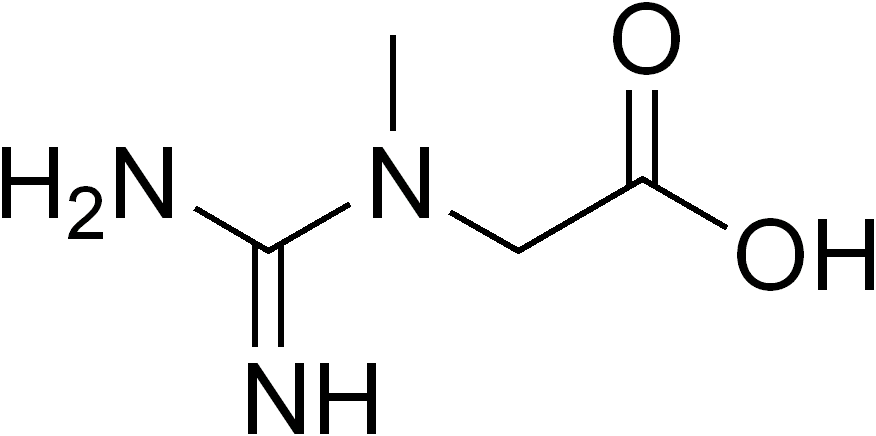
No. Creatine is the amino-acid compound; phosphocreatine is its phosphorylated storage form in muscle. Supplementation raises both the total creatine pool and its phosphocreatine component in many users.
Does creatine create ATP from nothing?
No. Phosphocreatine transfers a phosphate group to ADP to regenerate ATP, using energy already stored in the phosphate bond. It speeds energy recycling rather than supplying a new independent fuel source.
Why is creatine most useful for repeated intense exercise?
Repeated intense efforts cause rapid ATP turnover before slower metabolic pathways fully adapt. A larger phosphocreatine reserve can help maintain ATP availability across those efforts, especially when recovery time is short.
Does the ATP mechanism prove every creatine claim?
No. It explains the strongest muscle-performance effects but does not by itself establish cognitive benefits, disease treatment, or universal safety. Each outcome needs direct human evidence.
Limitations
- Most mechanistic work relies on muscle samples or laboratory tasks and may not reflect the full complexity of real-world performance.
- A larger phosphocreatine reserve does not prevent every source of fatigue, so effects vary with exercise design and duration.
- General safety evidence applies chiefly to healthy adults at standard doses and cannot be extended automatically to kidney disease, pregnancy, minors, or relevant medication use.
References
Bioavailability, Efficacy, Safety, and Regulatory Status of Creatine and Related Compounds: A Critical Review. — source record
Common questions and misconceptions about creatine supplementation: what does the scientific evidence really show? — source record
International Society of Sports Nutrition position stand: safety and efficacy of creatine supplementation in exercise, sport, and medicine. — source record
Elevation of creatine in resting and exercised muscle of normal subjects by creatine supplementation. — source record
Muscle creatine loading in men. — source record
Effect of creatine supplementation on body composition and performance: a meta-analysis. — source record
Short-Term Creatine Supplementation and Repeated Sprint Ability-A Systematic Review and Meta-Analysis. — source record
Effects of Creatine Supplementation on Brain Function and Health. — source record
Last updated: 2026-11-24